


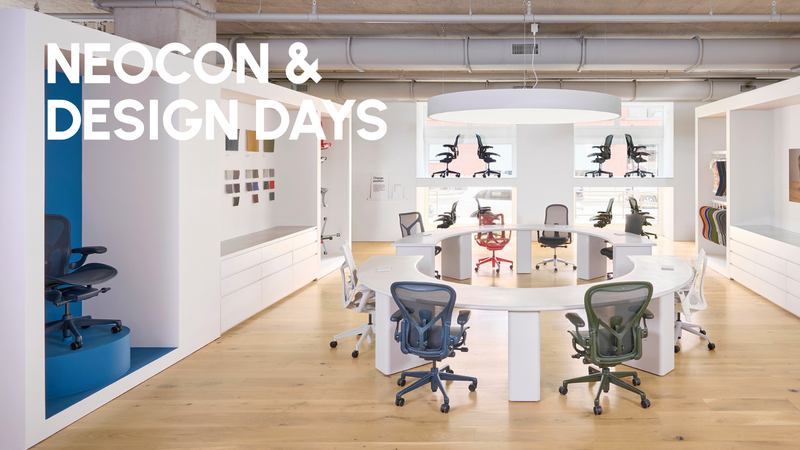
A View from Chicago
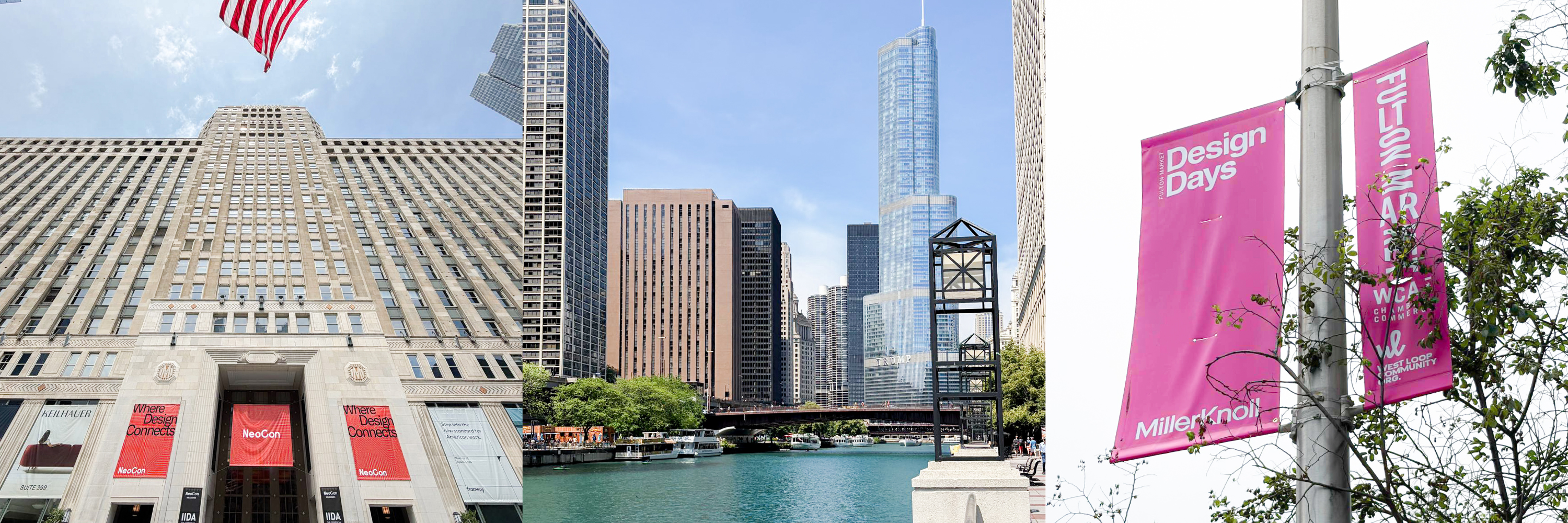
NeoCon and Design Days offer a valuable snapshot of where commercial interiors and workplace design are heading. Taking place across The Mart and Fulton Market, the events bring together leading furniture brands, designers and workplace thinkers to explore the future of work, hospitality, education and shared spaces.
This year, the strongest ideas were centred around three themes we see shaping the workplace: power, materials and colour.
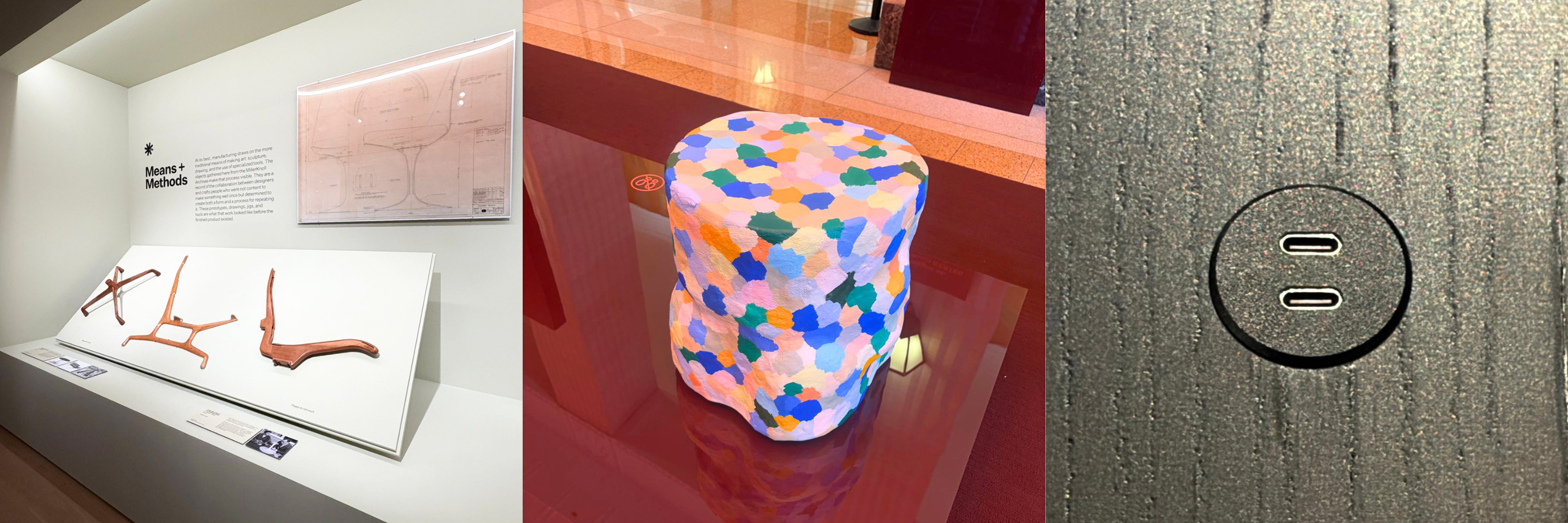
Across the showrooms and exhibitions, the conversation felt less about standalone products and more about how furniture, technology, finishes and flexible spaces work together.
Power, Built In
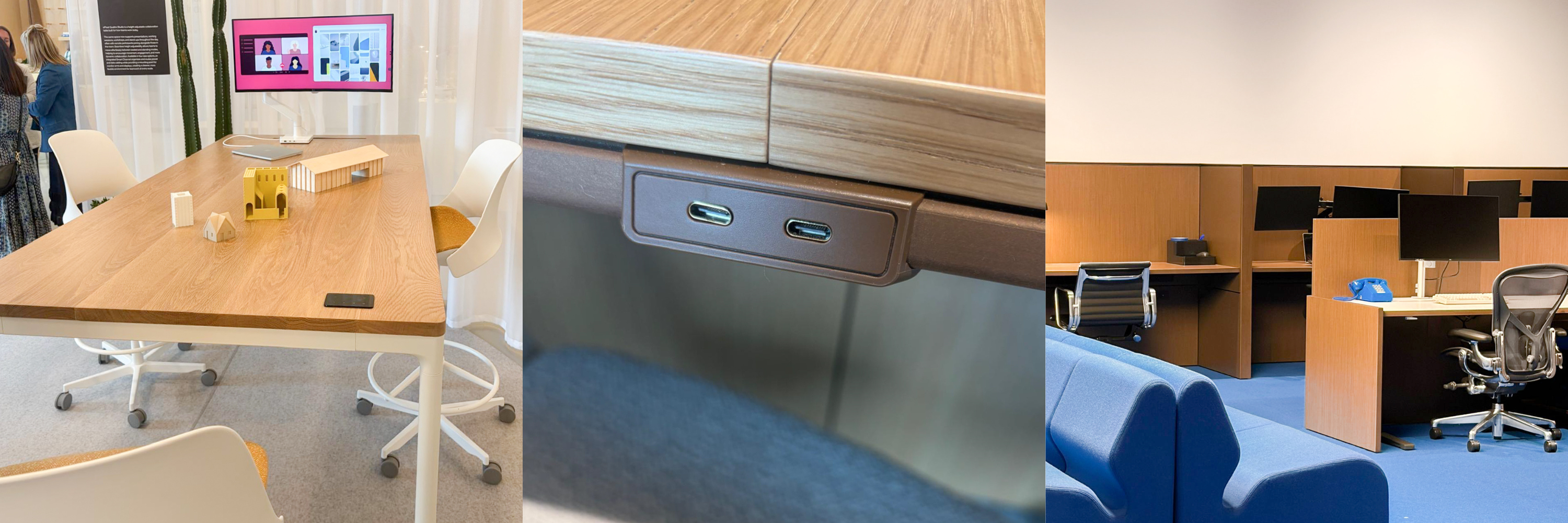
Power was one of the most consistent themes across the event. Not just in the obvious sense of access to charging and connectivity, but in how power can be integrated more quietly and intelligently into the workplace.
Across the showrooms, there was a clear focus on reducing clutter and making infrastructure feel more seamless. Rather than adding technology as an afterthought, the stronger ideas made power part of the space itself.
This helps create workplaces that feel cleaner, calmer and easier to use.
Materials with Meaning
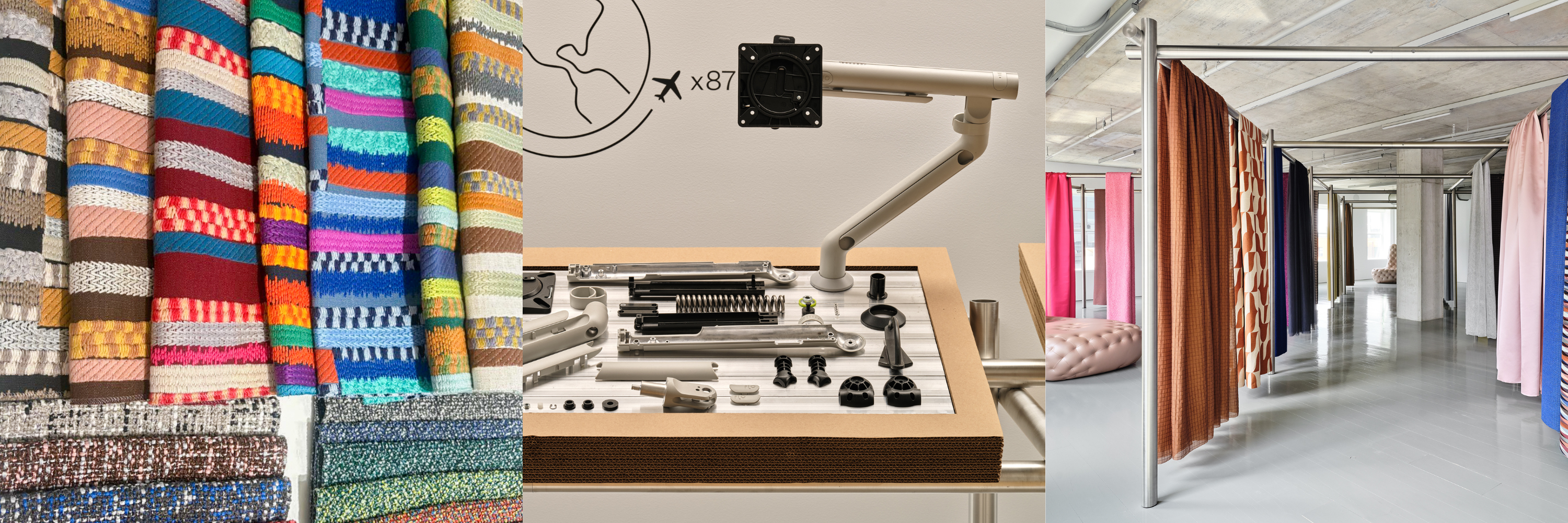
There was a clear move towards products that feel tactile, durable and considered, with sustainability becoming part of the design story rather than a separate message.
At MillerKnoll’s Fulton Market Design Days, this came through across a wide range of settings for workplace, hospitality, healthcare, education and shared spaces.
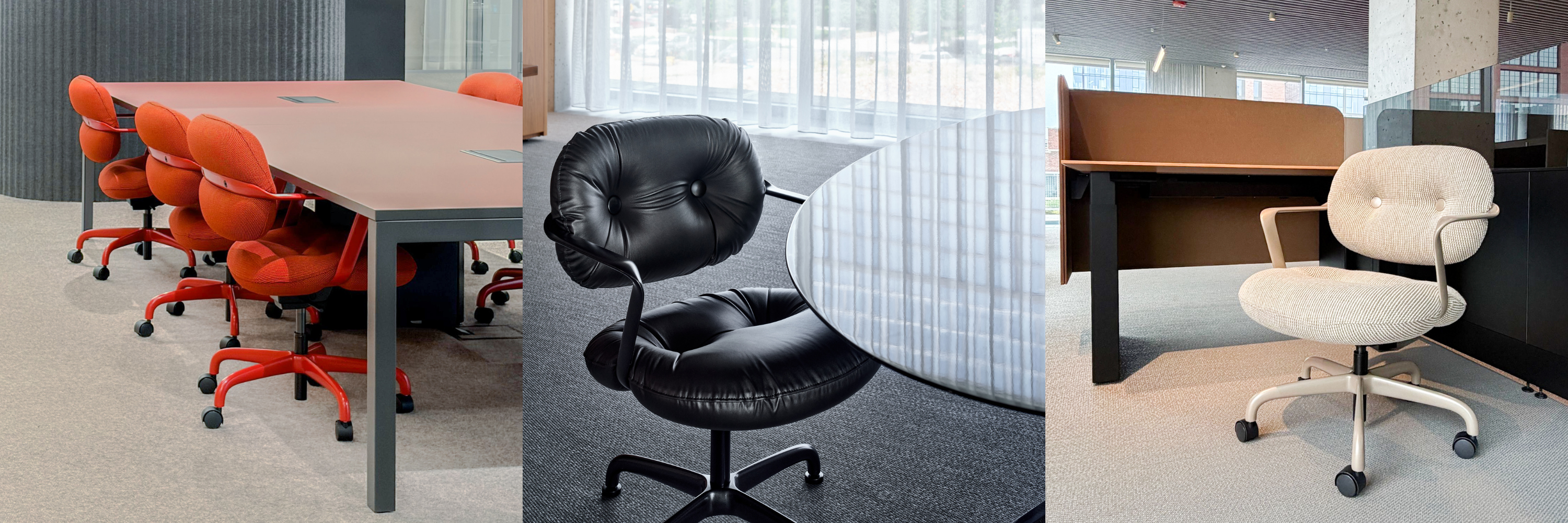
For Knoll, one of the key focuses was the Morrison Hannah Chair, designed by Jasper Morrison and Bruce Hannah. Its simplicity is part of its appeal. The chair has a lightness and practicality that allows it to move between different settings, from meeting rooms and collaboration spaces to hospitality and shared environments.
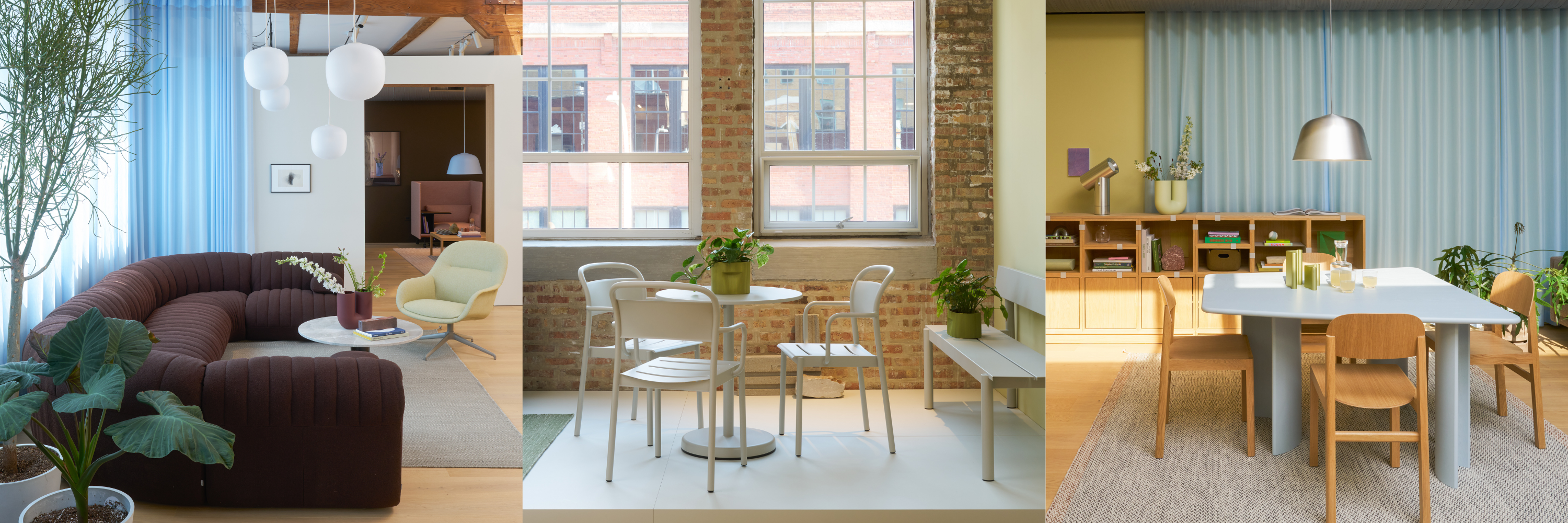
Muuto brought a softer, more sensory perspective, celebrating its 20th anniversary with the sculptural Coltre Sofa, alongside new lighting, outdoor and accessory introductions.
Its Design Days material spoke about nature, light, form, colour and tactility, which felt very relevant to the direction of workplace design.
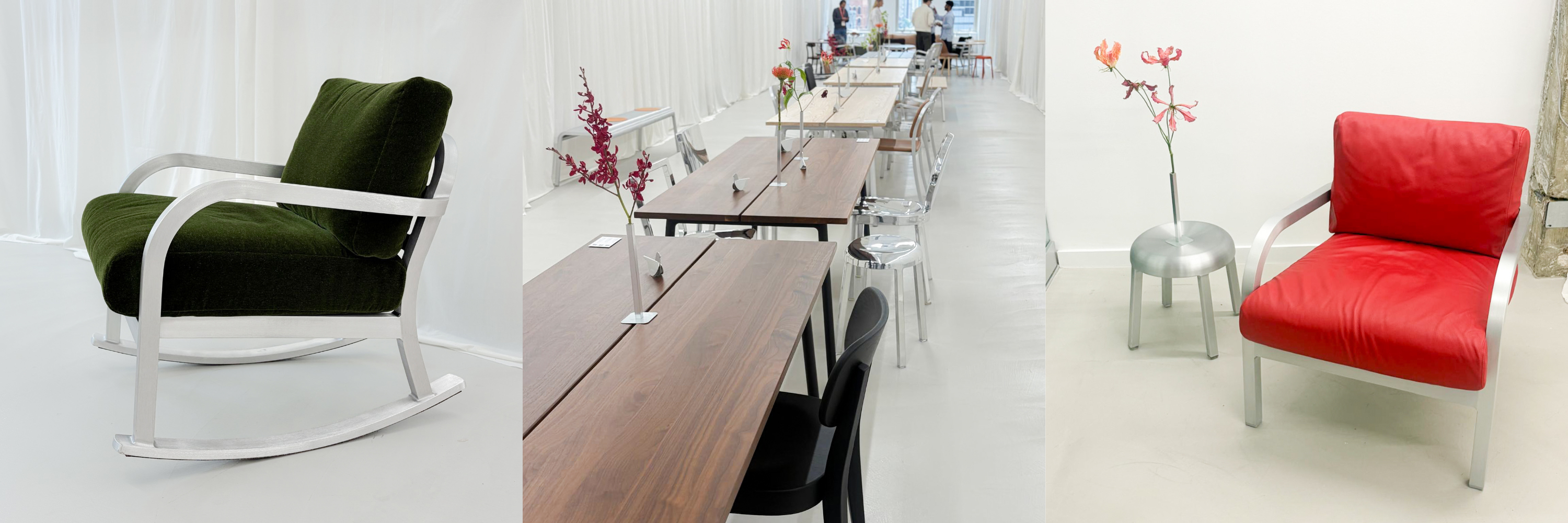
Emeco’s Navy Lounge Rocker by Jasper Morrison was another standout. Handcrafted from recycled aluminium, it continued Emeco’s long standing material story while bringing a more relaxed, comfortable form to the collection.
HAY’s Deville Collection by Julien Renault also connected strongly to this theme. Inspired by the classic bistro chair, the collection includes stackable chairs, armchairs and tables made from at least 60 percent post consumer recycled aluminium.
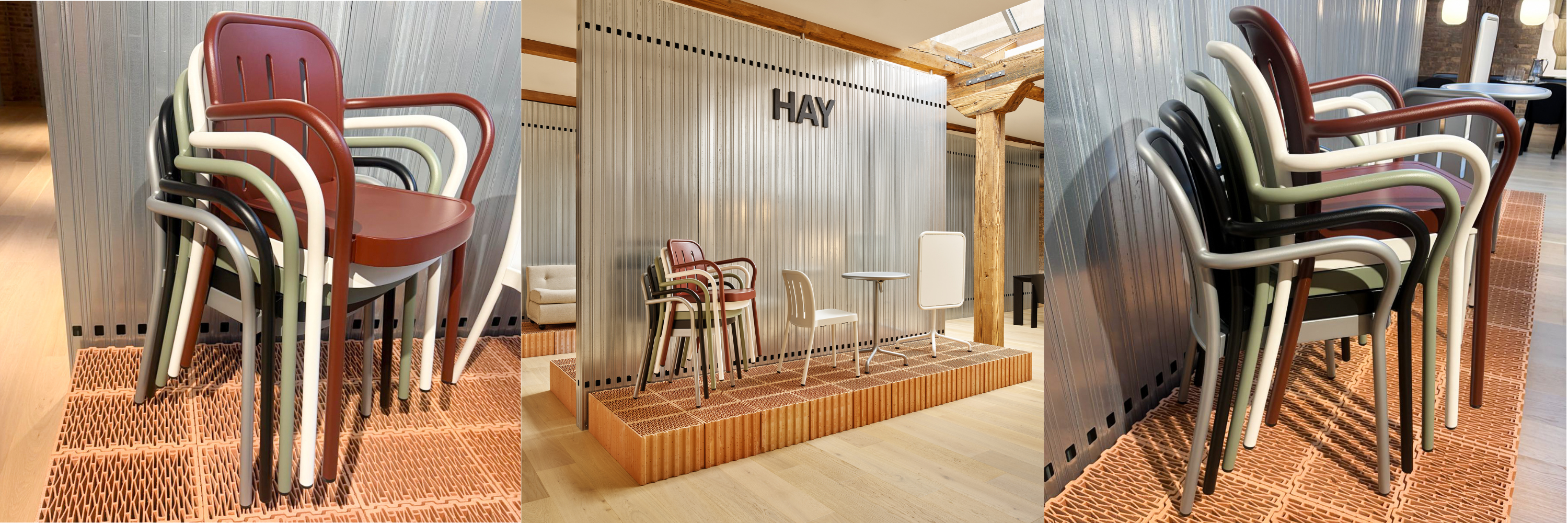
It felt like a good example of how outdoor and hospitality furniture can be practical, colourful and responsible at the same time.
Colour with Confidence
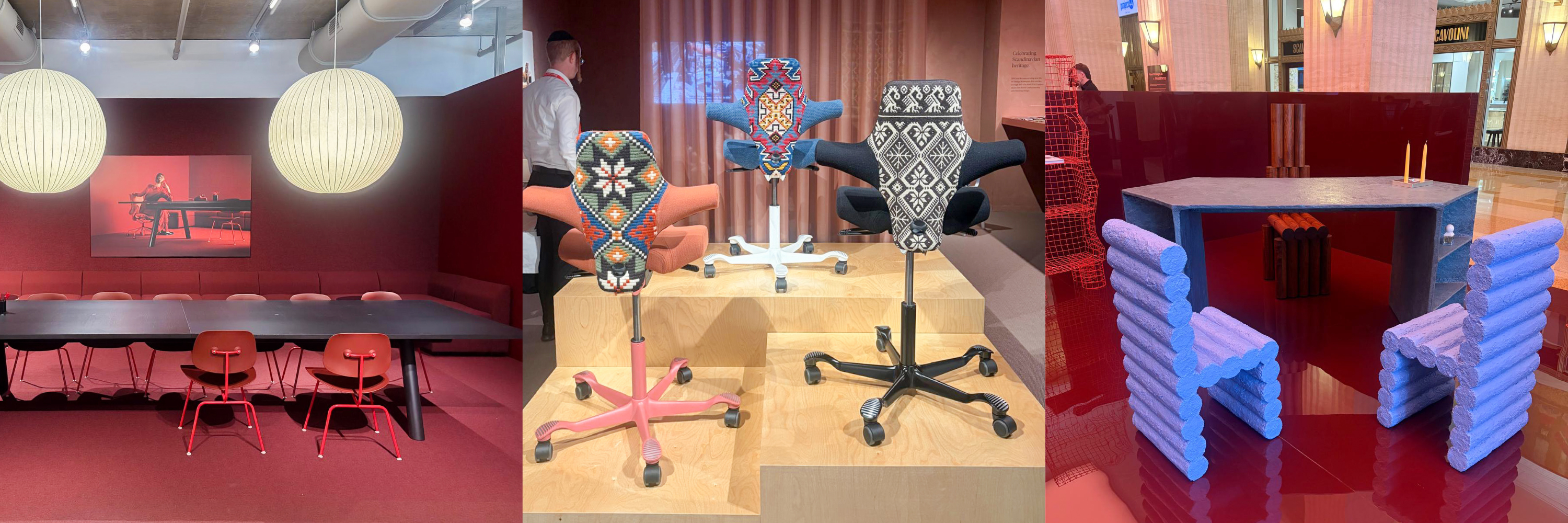
Colour was used with more confidence this year, but still in a thoughtful way.
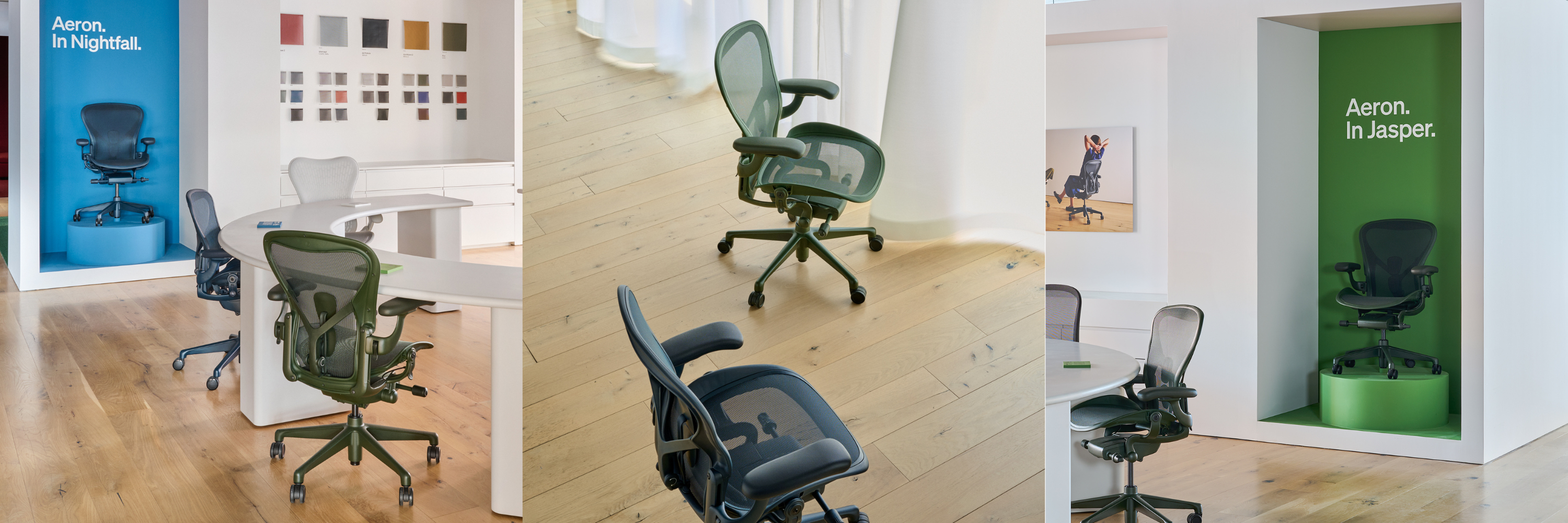
Herman Miller’s refreshed Aeron chair was one of the clearest examples. Shown in new colourways including Jasper and Nightfall, Aeron felt familiar but refreshed. The significance of these new colours is that they move Aeron into a warmer, more expressive space without taking away from its original purpose.
It also reflects a wider shift in workplace design. Offices are becoming more residential, more layered and more emotionally considered, so even high performance products need to contribute to the feel of a space.
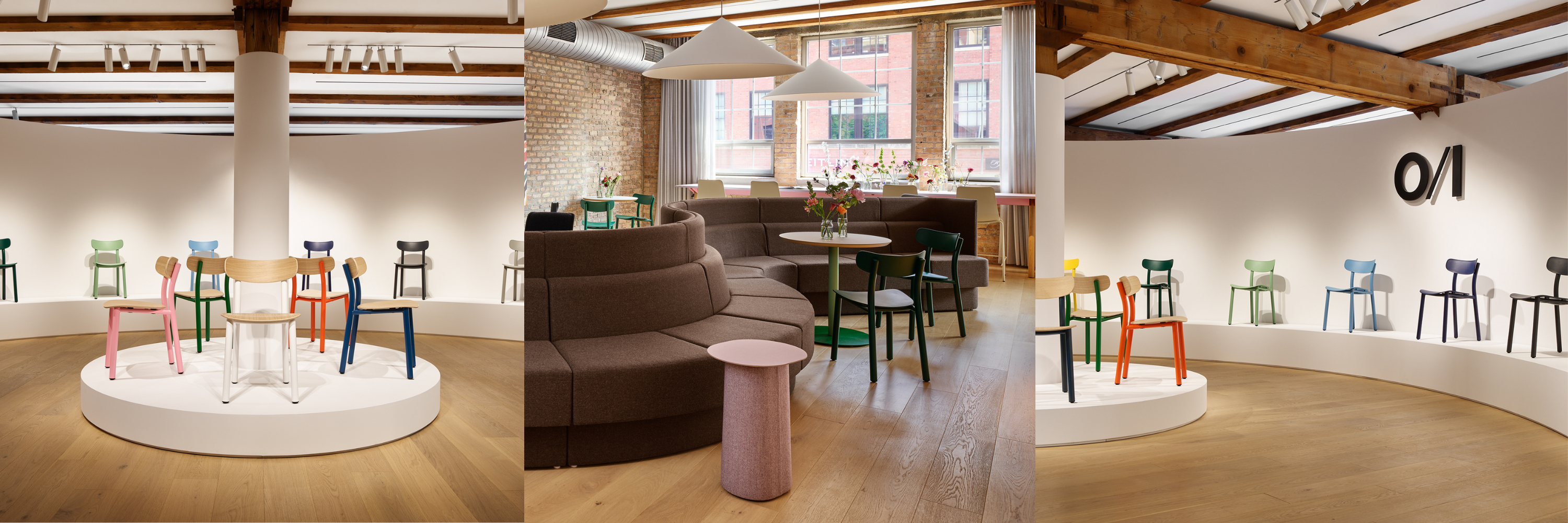
NaughtOne’s Lotti Chair by Keiji Takeuchi was another product that stood out. Having also seen it at Clerkenwell Design Week, it was interesting to see how well it translated into the NeoCon and Design Days setting.
NaughtOne’s Pullman Modular Seating continued this idea, offering practical and flexible seating that brings comfort, colour and purpose to different types of environments.
Spaces That Adapt
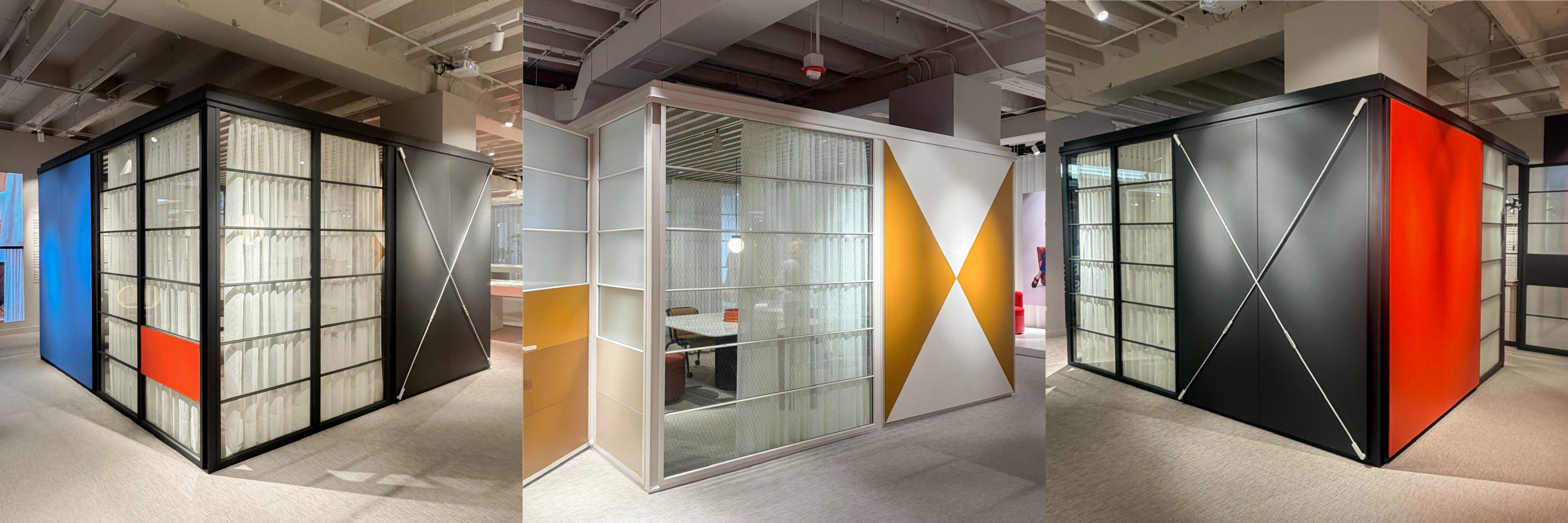
Flexibility was another important thread running through the event.
One of the most talked about was the Eames Pavilion System by Kettal. As an Eames piece, it carries the legacy of Charles and Ray Eames, whose work has always been closely connected to systems, problem solving and designing around people.
Presented at NeoCon as part of Kettal’s workplace vision, the Pavilion System explores architecture, furniture, lighting, acoustics and collaboration through a flexible, human centred structure.
It felt especially relevant for workplaces that need adaptable zones for focus, meeting, retreat and informal interaction. A strong continuation of the Eames idea that design should be useful, adaptable and deeply connected to how people live and work.
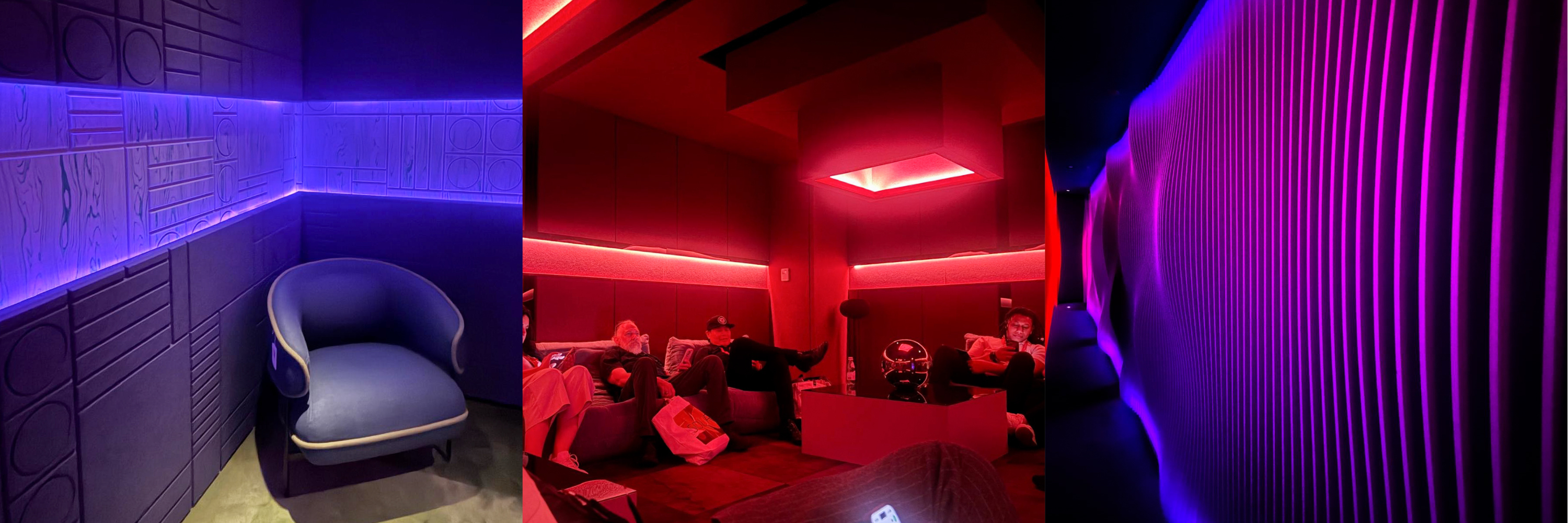
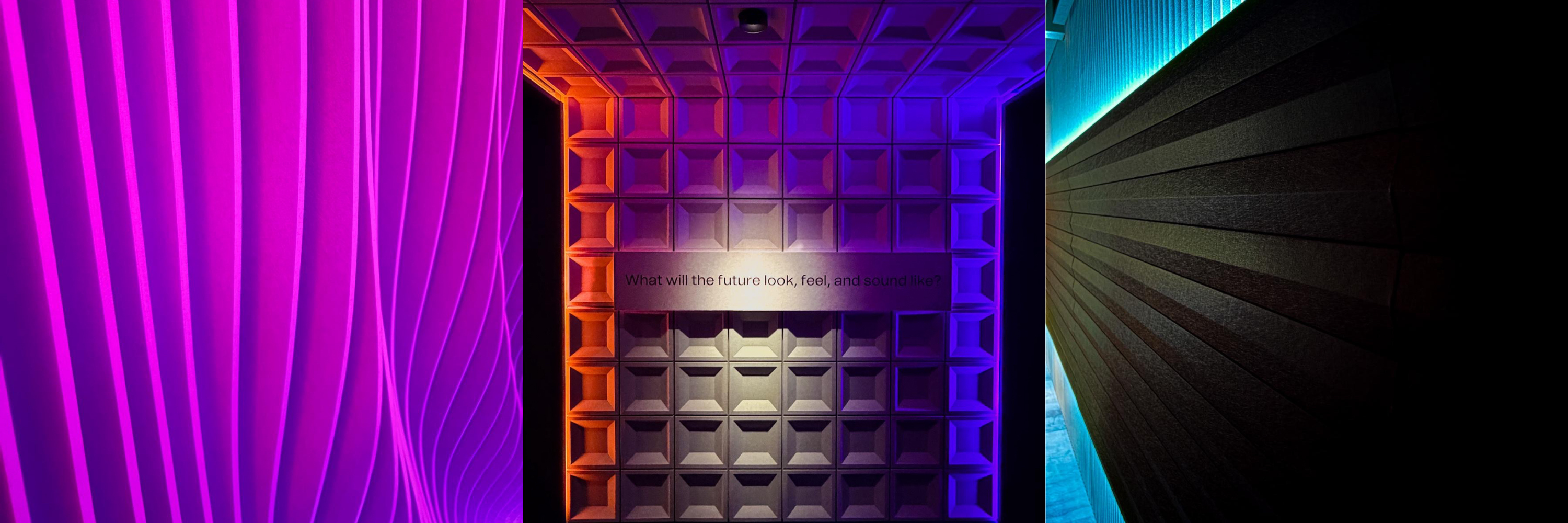
Turf approached flexibility in a different way, through acoustics and atmosphere. Their space felt immersive and almost sci fi in its approach, using acoustic forms, soft geometry and strong visual impact to show how sound control can become part of the design language of a workplace.
It was a reminder that comfort in the workplace is not only about furniture. Sound, texture, shape and visual rhythm all play an important role in how a space supports people.
Award Winning Design
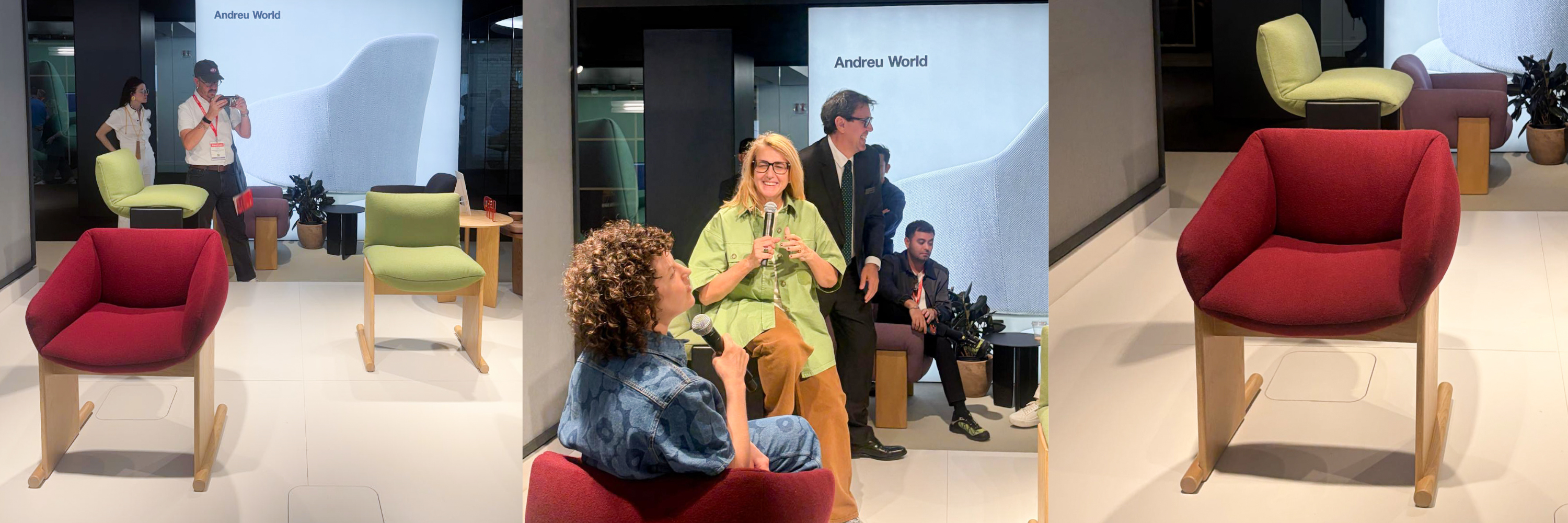
Andreu World’s Patin Chair won Gold in the Seating: Guest category and also received a People’s Choice award, while Patin Stool won Silver in Seating: Stools.
Patin was one of our highlights because it combines a simple, generous form with the kind of versatility that makes sense across workplace, hospitality and shared environments.
Turf Design also had a strong showing, winning Gold at Best of NeoCon for Cushion in the Panels, Partitions, Screens and Space Dividers category.
The strongest products were not just visually impressive. They were practical, adaptable and thoughtful in how they supported real workplace needs.
Final Thoughts
NeoCon and Design Days 2026 felt optimistic, practical and highly relevant to the future of workplace design.
For us, the message was clear.
The future workplace will be more flexible, more tactile and more personal, but still grounded in performance.
That is exactly where great design should be.