


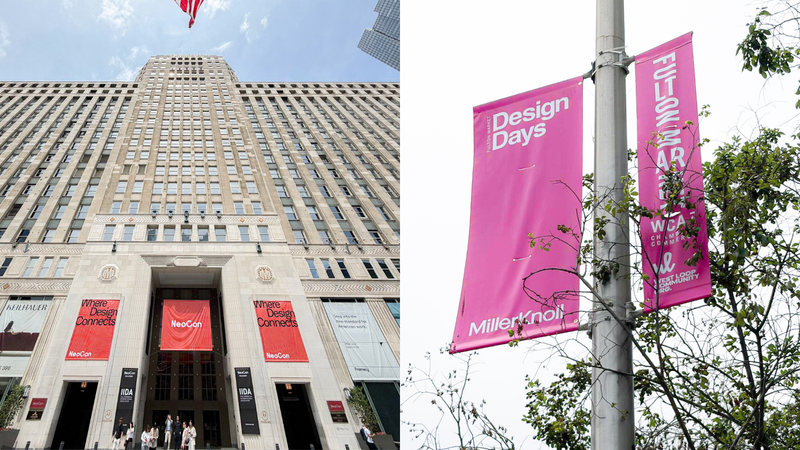
NeoCon and Design Days gave us plenty to think about.
Across the showrooms, exhibitions and installations, three themes kept coming through: power, materials and colour.
They were not always obvious themes. Sometimes they came through in the way a product handled technology. Sometimes it was in the feel of a material, or the confidence of a new colour palette.
For us, five designs stood out because they each told a slightly different story about where workplace and commercial interiors are heading.
They also reminded us that good design does not always need to be loud. Often, the most interesting products are the ones that solve a problem quietly and stay useful for a long time.
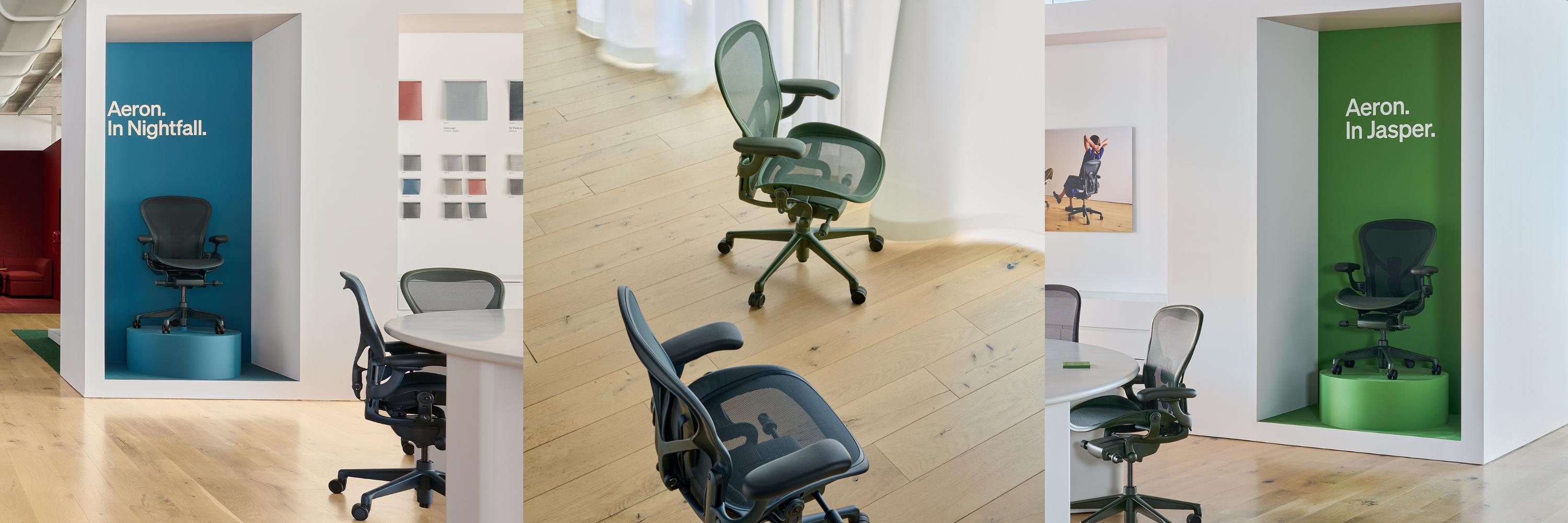
Aeron in Jasper and Nightfall
Aeron is a chair we know well.
Designed by Bill Stumpf and Don Chadwick, it has been part of the workplace conversation since the 1990s and remains one of the most important task chairs ever made. It is one of those products that set a standard for comfort, support and performance.
What felt interesting this year was seeing Aeron in the newly released Jasper and Nightfall finishes.
These colours give the chair a different kind of presence. They are richer, warmer and more expressive, but they do not take away from what Aeron is known for.
For a long time, task seating has often been treated as something technical. Something specified for performance, but not always considered as part of the wider mood of a space.
Jasper and Nightfall help Aeron sit more naturally within workplaces that are becoming softer, more layered and more personal.
It is still a performance chair. It still does what people expect Aeron to do. But now it can contribute more to the overall feel of the interior too.
Eames Pavilion System by Kettal
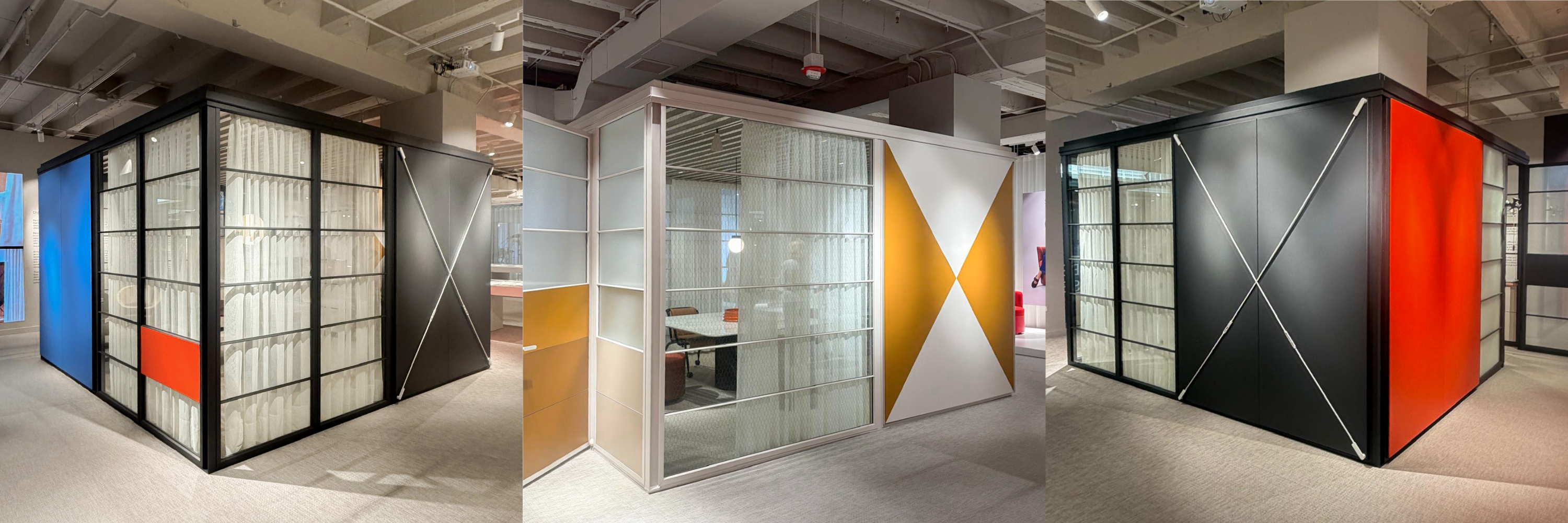
The Eames Pavilion System by Kettal felt like one of the most important ideas at the event.The system has been developed by the Eames Office in collaboration with Kettal, and it is rooted in the work and thinking of Charles and Ray Eames.
Charles and Ray Eames have always represented more than furniture. Their work was about problem solving, systems, communication and making design more useful to people.
That makes the Pavilion System particularly interesting.
The system looks at space in a more complete way. It brings together architecture, furniture, lighting, acoustics and collaboration, creating settings that can adapt to different needs throughout the day.
Workplaces now need to support focus, meetings, informal conversations, private moments and team working, often within the same footprint.
The Eames Pavilion System responds to that challenge in a way that feels structured but still human. It is not just a product for dividing space. It is a way of thinking about how space can work harder, feel better and adapt more easily.
That connection between heritage and future workplace needs is what made it stand out.
Navy Lounge Rocker by Emeco
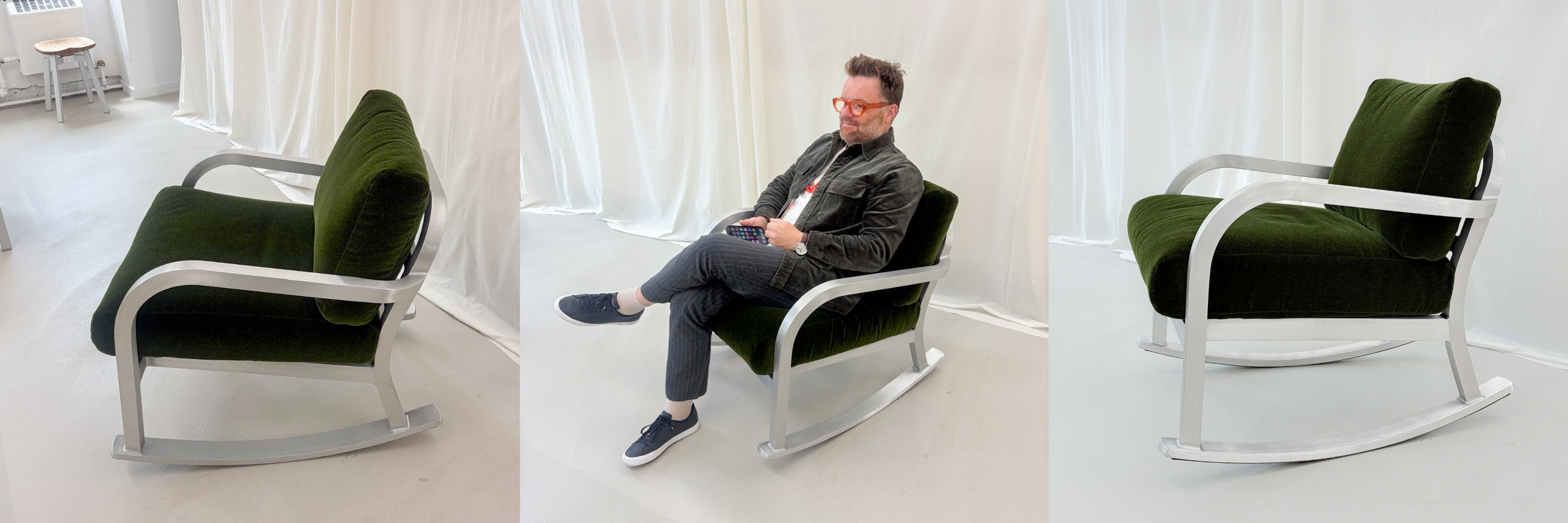
Emeco’s Navy Lounge Rocker by Jasper Morrison had a quieter presence, but it stayed with us.
Jasper Morrison is known for what he has called “super normal” design. His work is often simple, useful and calm, with a focus on objects that feel natural in everyday life.
That approach suits Emeco very well.
Emeco has such a strong material story, especially through its work with recycled aluminium and its long history of making furniture that is built to last. The Navy Lounge Rocker continues that story, but in a softer, more relaxed way.
The material is clear. The construction feels purposeful. Nothing feels unnecessary. In workplace, hospitality and shared spaces, furniture often needs to do a lot. It has to be durable, responsible, comfortable and visually calm.
Patin by Andreu World
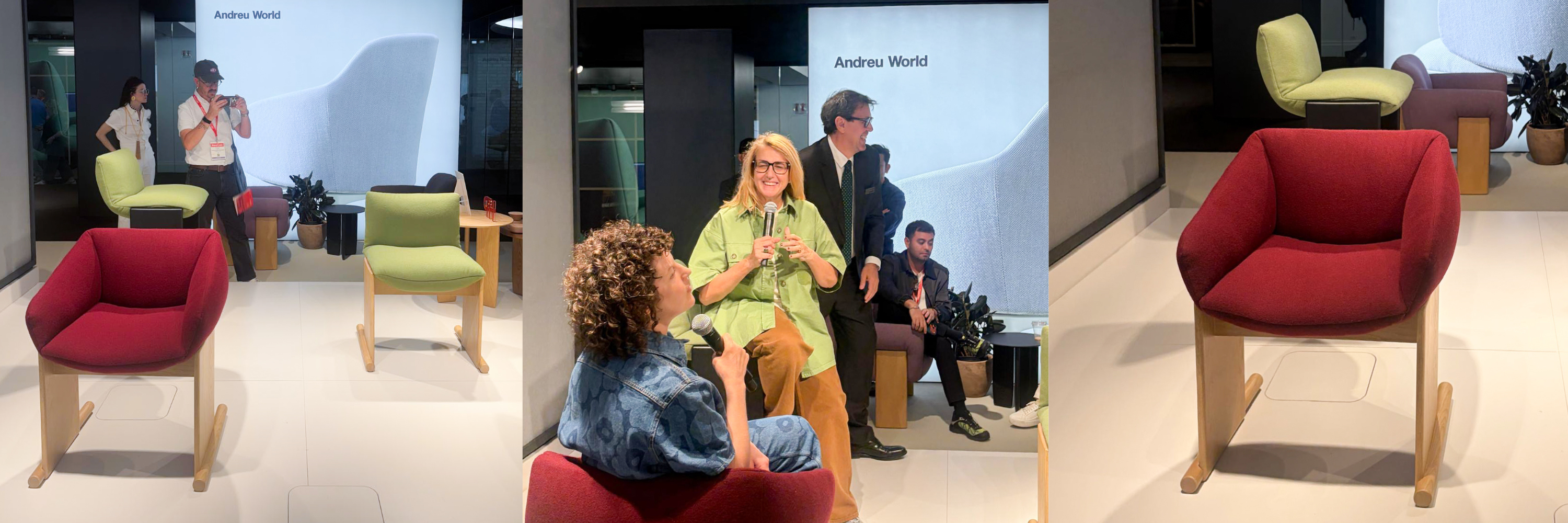
Patin by Andreu World was another product that really stood out.
Designed by Patricia Urquiola, it carries the warmth, softness and clarity that often runs through her work. Urquiola is one of the most influential designers working today, known for bringing together industrial design, craft, comfort and a strong sense of materiality.
That approach comes through in Patin.
It has a simple, generous form that feels easy to place in lots of different environments, from workplace and hospitality to education and shared spaces.
Patin also had a very strong awards showing, with the Patin Chair winning Gold in the Seating: Guest category and a People’s Choice award. The Patin Stool also won Silver in Seating: Stools.
For us, Patin stood out because it felt versatile, thoughtful and beautifully resolved.
Deville Collection by HAY
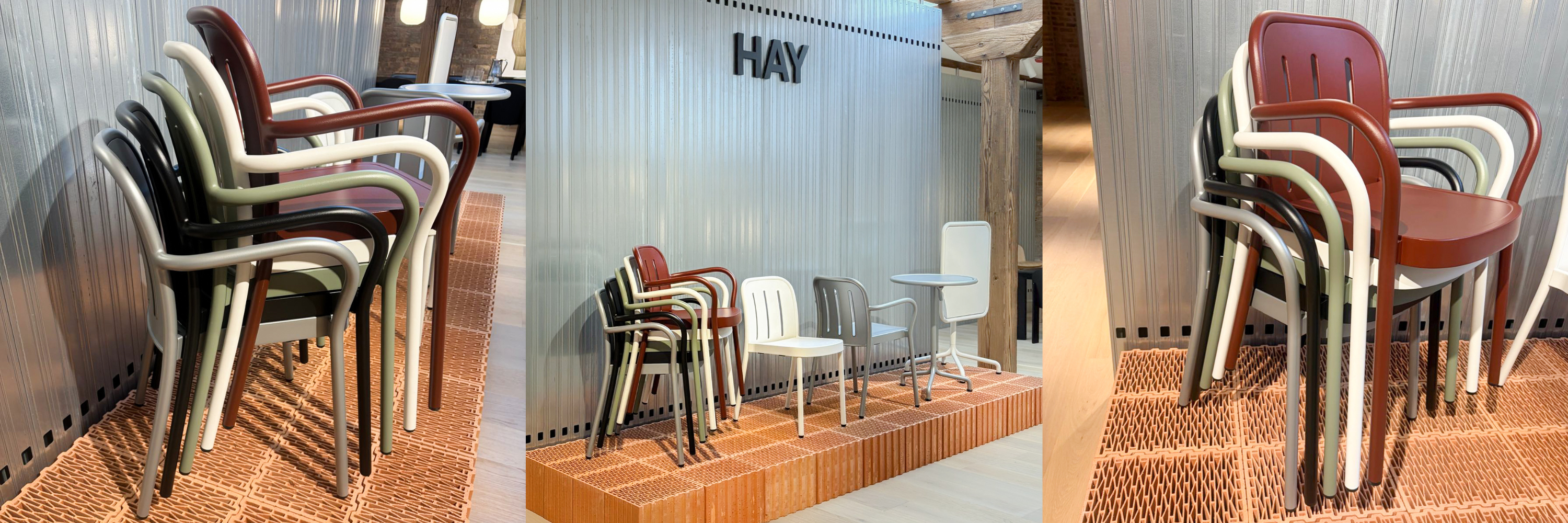
HAY’s Deville Collection brought a slightly different energy.
Designed by Julien Renault, it takes inspiration from the familiar language of the bistro chair.
Renault is a French designer based in Brussels, and his work often has a direct, accessible quality. He has a strong interest in everyday objects, manufacturing processes and designs that feel familiar without becoming generic.
There is something very easy about the Deville Colelction. The form is simple, the colours are confident and the collection feels practical without being plain.
Deville also connected strongly to the materials conversation. Made from at least 60 percent post consumer recycled aluminium, it showed how responsible material choices can be part of a product without making it feel overly technical.
For us, Deville stood out because it had a clear purpose, but also a sense of fun.
What They Tell Us
Looking back at these five designs, they each reflected something different about the direction of workplace and commercial interiors. They also brought us back to the three themes we kept noticing across NeoCon and Design Days: power, materials and colour.
Power came through most clearly in the way these products support flexibility. The Eames Pavilion System showed how space can work harder, helping workplaces shift between focus, collaboration, privacy and connection.
Materials were central to the Navy Lounge Rocker, Patin and Deville. Emeco’s recycled aluminium gave Navy Lounge its honesty and durability, while Patin showed Patricia Urquiola’s ability to bring softness, comfort and clarity together through form.
Deville also connected strongly to the materials story, using post consumer recycled aluminium in a way that felt light, practical and joyful.
Colour was just as important. Aeron’s new shades showed how task seating can become more connected to the overall feel of a workplace, while Deville brought confidence and warmth through tones such as Thyme Green, Cream White and Iron Red.
Together, these products pointed towards a workplace that is more flexible, more tactile and more personal.
People want spaces that work hard, but they also want them to feel good. They want performance, but not at the expense of warmth. They want flexibility, but still with a clear sense of design.
They were thoughtful, useful and grounded in real needs. For us, that is always where the best design starts.